Back in college, I tried to learn Git.
I remember watching tutorials, typing random commands into the terminal, and still wondering, “What’s the point of all this?”
It never really clicked.
The Myth of “Collaboration” in College
In school, “group projects” usually meant one person writing all the code while everyone else nodded along.
There wasn’t much collaboration — more like organized chaos.
No version control. No structured workflow. Just a bunch of files flying around with names like final_v2_updated_REAL_FINAL.zip.

It worked (somehow), but it wasn’t scalable or sustainable.
The Reality Check: The Professional World
Then I started working with real developers — and that’s when everything changed.
In the real world, projects aren’t weekend assignments. Small projects span months, big projects span years. Multiple developers work together, constantly updating and improving the same codebase. Collaboration isn’t optional; it’s the foundation of everything.
At that scale, even small mistakes can waste days of effort and resources.
That’s when Git went from being a confusing tool to an absolute necessity.
Code Is Always Changing
One of the first lessons I learned in the industry is that code is never finished.
It’s constantly evolving — updated, refactored, optimized, or even rewritten.
What works perfectly today might break tomorrow.
And since humans make mistakes (we all do), those mistakes can easily spread across dozens of files.
Without version control, trying to fix a broken build would be a nightmare. You’d have to remember every file, every line, every change — impossible for any human to manage.
But with Git, it’s just one command away.
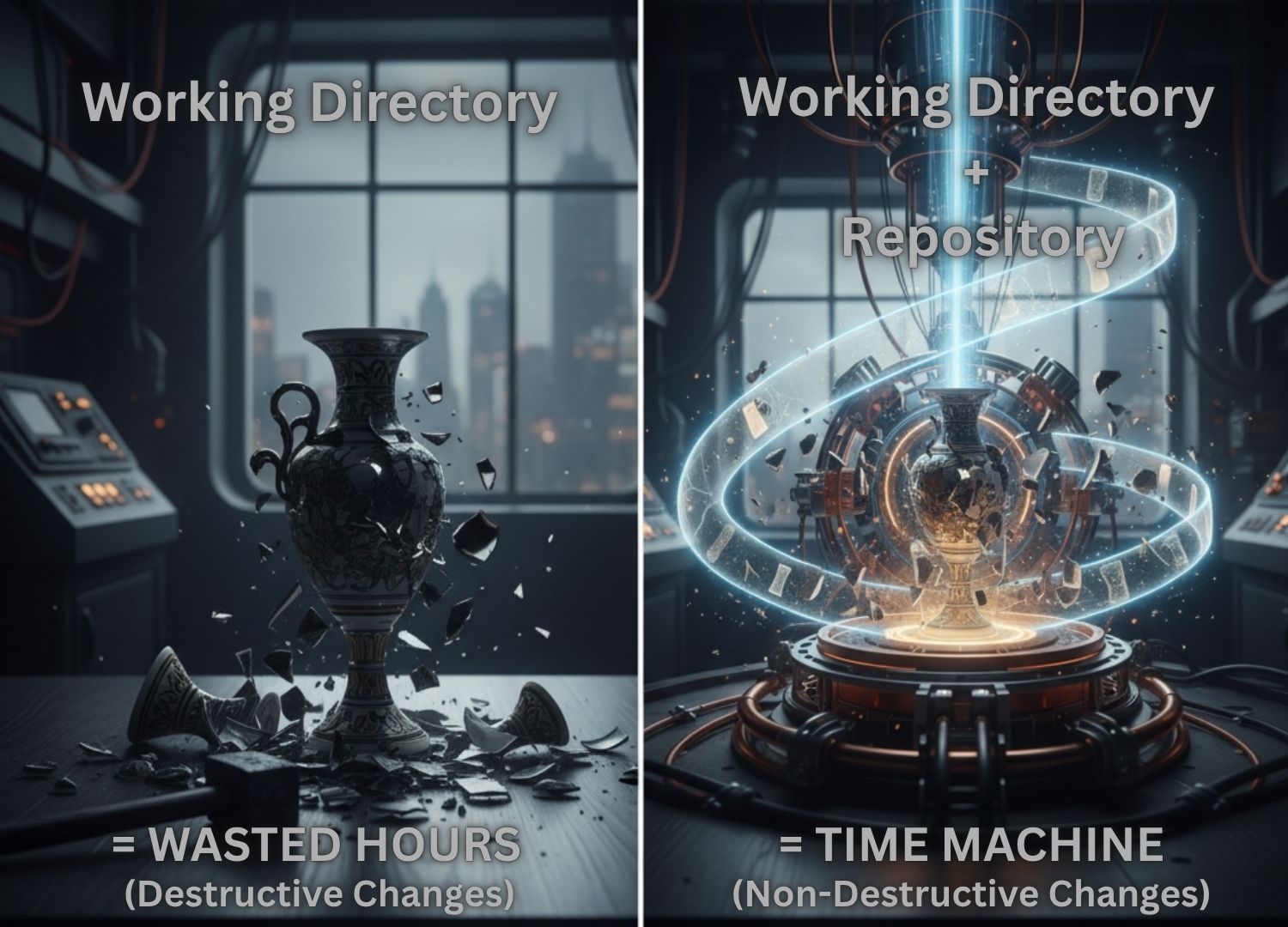
You can revert a bad change instantly, recover lost work, or jump back to a stable version whenever you need. It’s like having a time machine for your code.
Git: The Backbone of Collaboration
Beyond saving history, Git changed how teams collaborate.
With branching, every developer gets their own sandbox — a place to experiment freely without affecting the main project.
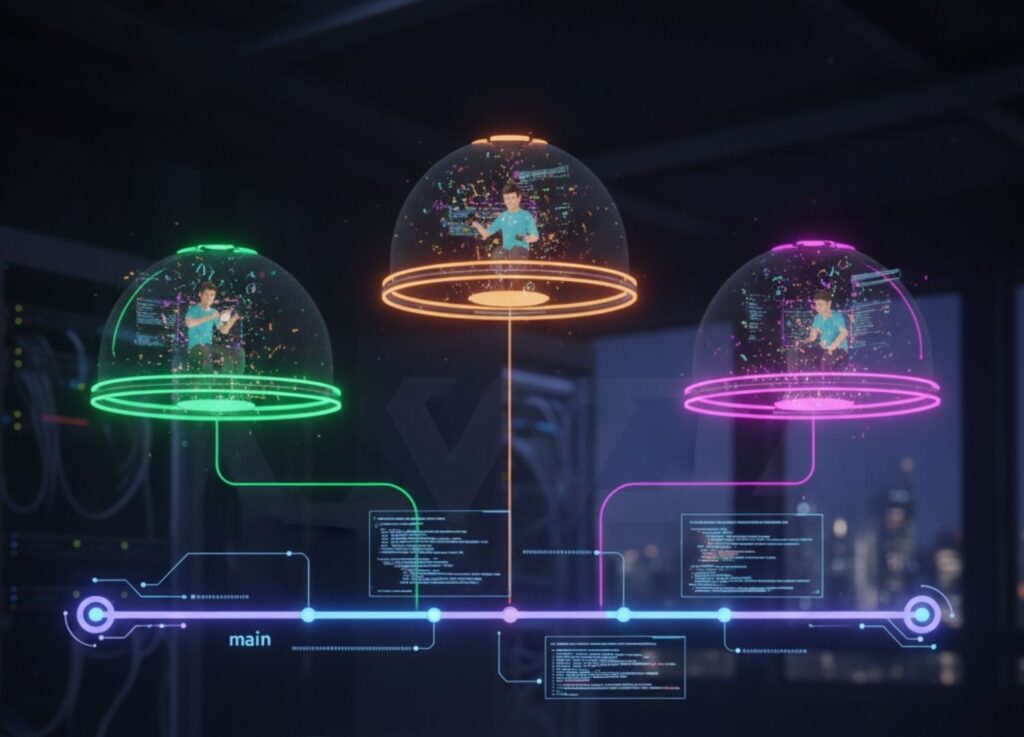
When their work is ready, they open a Pull Request (PR). That’s where the magic of teamwork happens: others review, test, and discuss the changes before merging them into the main branch.
It’s clean, organized, and transparent.
Git even makes code reviews easier by showing only what changed — not the entire codebase. That small detail saves so much time and helps maintain consistency and quality across the team.
Why Git Matters
Git turns fragile, ever-changing code into something reproducible.
It gives developers confidence to innovate, experiment, and collaborate without fear of breaking everything.
Looking back, I realize why Git didn’t make sense to me in college — because I hadn’t yet experienced real collaboration.
Now, I can’t imagine working without it.
Git isn’t just version control.
It’s the glue that holds modern software development together.